
 Whether international adoptee Vivian is at the airport gate in Toronto, exploring a Chinese marketplace for the first time, or touring the orphanage that she was adopted from, the visually impaired will be able to follow the action in The Invisible Red Thread.
Have you ever wondered what that “SAP” button on your remote control is for? On most channels, clicking that button turns on a hidden audio track, known as descriptive video.
Just like closed captioning, descriptive video helps to bring stories on screen to audiences that used to be left out by TV and film. In descriptive video, short recorded narrations fit in between the lines spoken on screen, so that the visually impaired can follow along with action that is key to the story.

Sas Harris
Sas Harris is writing and recording the descriptive video for The Invisible Red Thread, one of the final steps in post-production. When Sas started recording descriptive video in 2002, she was the first in Quebec, and only the second in all of Canada, to offer the service to production companies and broadcasters.
We gave Sas a copy of The Invisible Red Thread, which she will load into a special computer program. The software helps her to work out the timing between the character’s lines, so she knows how long, or how short, her descriptions should be.
Sas has been writing and recording descriptive video for almost ten years, and is used to working with her voice– she was a singer for 30 years before changing tracks.
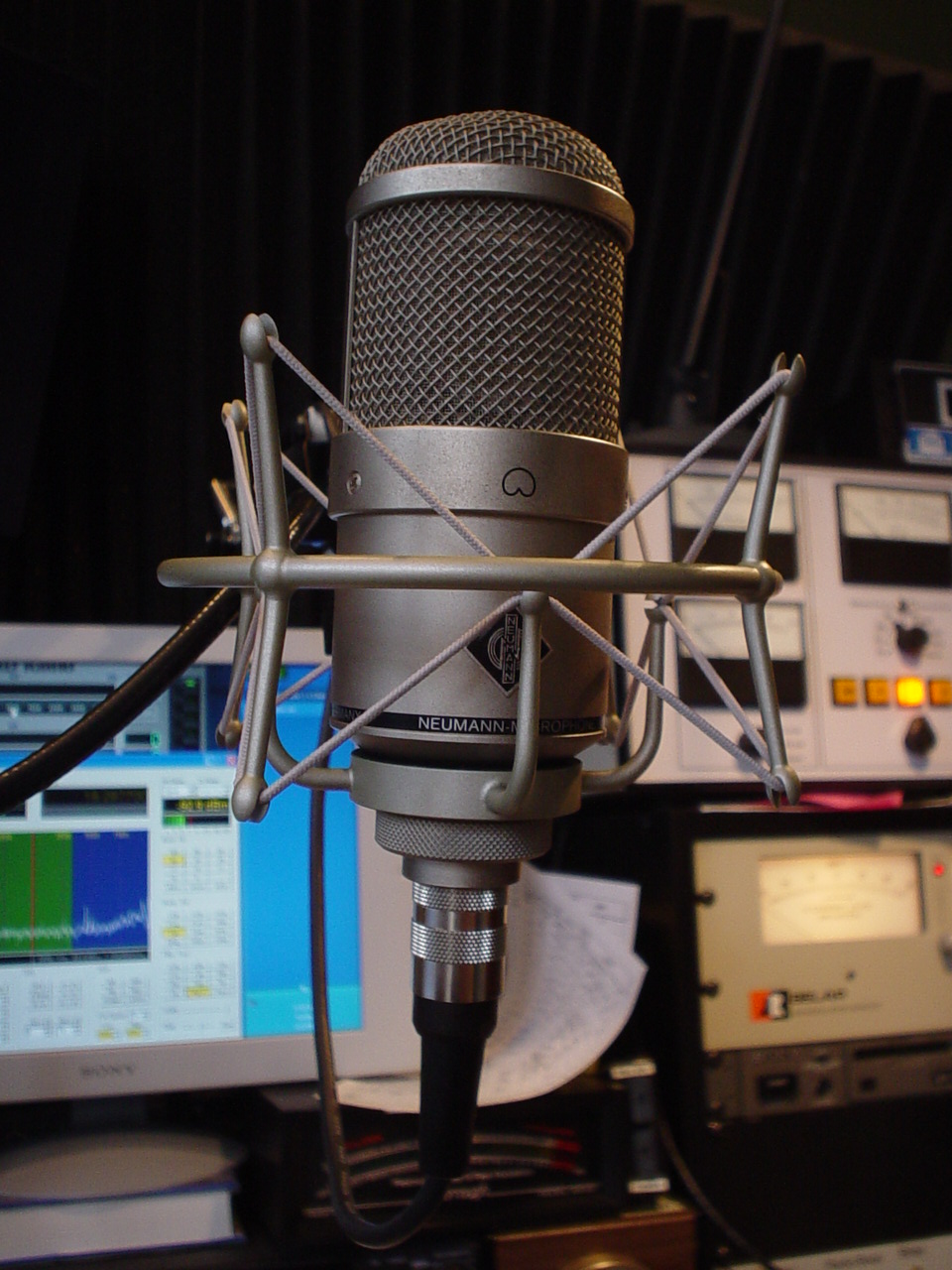
Over several days, Sas will work her way through The Invisible Red Thread to plan and write the descriptions. Then she’ll use her specially-built sound booth to record the short snippets of narration.
Sas’s work requires her to be an efficient writer. There’s an art to descriptive video, she says, since each description has to be tailored to the spaces between the characters’ dialogue. There may be only a sliver of time to explain a lot of action. Other times, she says, the natural sounds in the film can speak for themselves.
“If there’s a crowd on screen that gasps,” she says, “I don’t need to say, ‘The crowd gasps.’ The visually impaired have very acute hearing. Sometimes it’s better to let the natural sounds tell the parts of the story when they can.”


 The Invisible Red Thread is made possible with 100% funding from the OMNI Television Independent Producers Initiative. The $32.5 million fund is a seven-year commitment created and made available for the independent production of third-language ethnocultural programming. The fund is not only dedicated to helping Canadian independent producers tell their stories in their language of comfort, but also to make sure that these stories are accessible to other ethnocultural communities through re-versioning in different languages. This is the industry’s first, and only, major source of funding for the independent production of non-official language programming. More details on the fund are at OMNI Television’s website
  The Invisible Red Thread - The Movie