Win Free Tickets to our Premiere!

You might have heard about the festival premiere of “The Invisible Red Thread”,
in less than two weeks at the Montreal World Film Fest. You might also know
about the story behind the documentary: 15 year old Vivian Lum returning to her
birth land to discover the life she might have had if she’d not been
internationally adopted. Now here’s your chance to win one of four sets of free
tickets!

Just send a note under 100 words to  info@picturethis.ca telling us about your
personal interest in  the film.  Whether you have a family connection to
adoption, an interest in China, or just love seeing documentaries, we’d love to
read about it.  We’ll give tickets to the third, tenth and twentieth writers –
and will announce the winners by noon on Friday August 19th.

Screenings are all at the NFB/ ONF Cinema located at 1564 St Denis, on the corner of De Maisonneuve at these three times:

Thursday, August 25 at 4:40pm
Friday, August 26 at 12:00pm
Saturday, August 27 at 9:40pm

More Information Here!

See you there!

Leave a comment

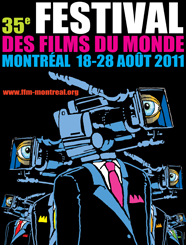
We’re premiering at the Montreal World Film Festival!

Montreal World Film Festival, here we come! “The Invisible Red Thread” is finally completed and ready to be seen! Our doc will have its world premiere in the ‘Documentaries of the World’ program at this prestigious festival from August 18th to the 28th. The one hour film follows fifteen-year-old Vivian Lum and her father from Canada to China to discover the land she was adopted from in 1995. She returns to her home city and orphanage and also meets Shumin Zhu, a locally adopted teen. The girls compare lives as the film explores the ripple effects of China’s One Child Policy and the ties that still connect Vivian to China.

We invite you to join us at one of the two festival screenings in Montreal. We’re still awaiting all the details, so more news soon on exact screening days and times to come. And if you can’t be in the theatre in Montreal this summer, don’t despair. There will be a national Canadian TV broadcast on OMNI TV this fall. More details coming later this summer.

Posted in News | Tagged , , , , , | 2 Comments

Descriptive Video So Everyone Can Follow Vivian’s Journey

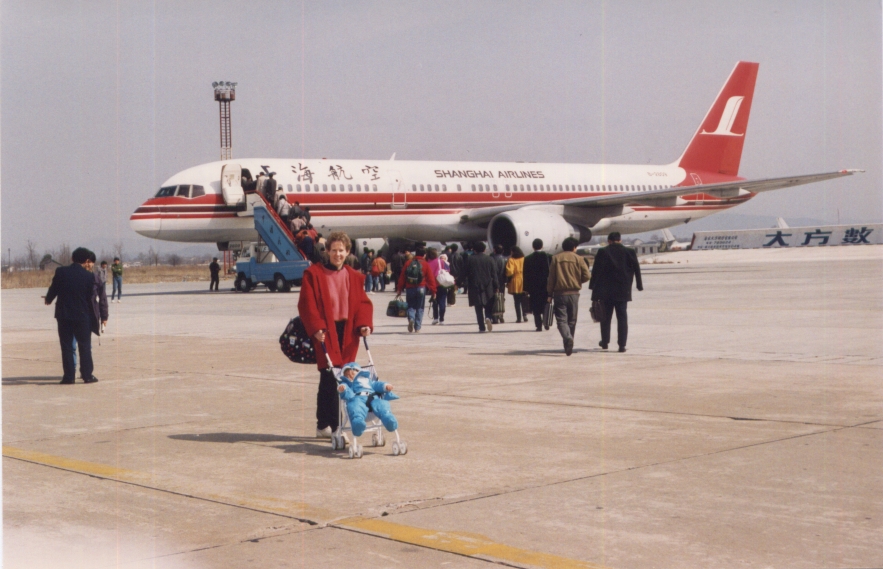
Whether international adoptee Vivian is at the airport gate in Toronto, exploring a Chinese marketplace for the first time, or touring the orphanage that she was adopted from, the visually impaired will be able to follow the action in The Invisible Red Thread.

Have you ever wondered what that “SAP” button on your remote control is for? On most channels, clicking that button turns on a hidden audio track, known as descriptive video.

Just like closed captioning, descriptive video helps to bring stories on screen to audiences that used to be left out by TV and film. In descriptive video, short recorded narrations fit in between the lines spoken on screen, so that the visually impaired can follow along with action that is key to the story.

Sas Harris

Sas Harris is writing and recording the descriptive video for The Invisible Red Thread, one of the final steps in post-production. When Sas started recording descriptive video in 2002, she was the first in Quebec, and only the second in all of Canada, to offer the service to production companies and broadcasters.

We gave Sas a copy of The Invisible Red Thread, which she will load into a special computer program. The software helps her to work out the timing between the character’s lines, so she knows how long, or how short, her descriptions should be.

Sas has been writing and recording descriptive video for almost ten years, and is used to working with her voice– she was a singer for 30 years before changing tracks.

Over several days, Sas will work her way through The Invisible Red Thread to plan and write the descriptions. Then she’ll use her specially-built sound booth to record the short snippets of narration.

Sas’s work requires her to be an efficient writer. There’s an art to descriptive video, she says, since each description has to be tailored to the spaces between the characters’ dialogue. There may be only a sliver of time to explain a lot of action. Other times, she says, the natural sounds in the film can speak for themselves.

“If there’s a crowd on screen that gasps,” she says, “I don’t need to say, ‘The crowd gasps.’ The visually impaired have very acute hearing. Sometimes it’s better to let the natural sounds tell the parts of the story when they can.”

Leave a comment

Creating the Soundscape for The Invisible Red Thread

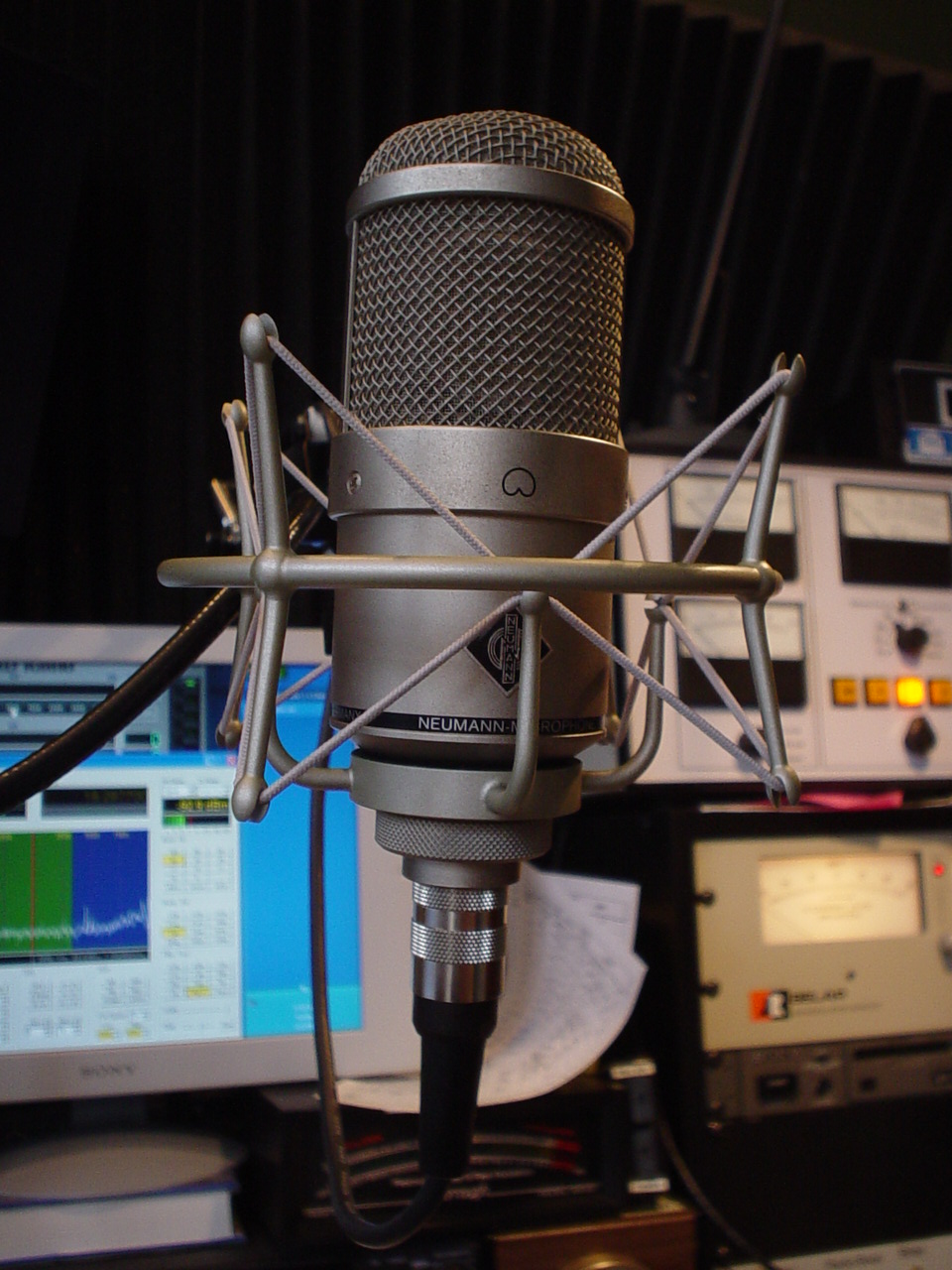
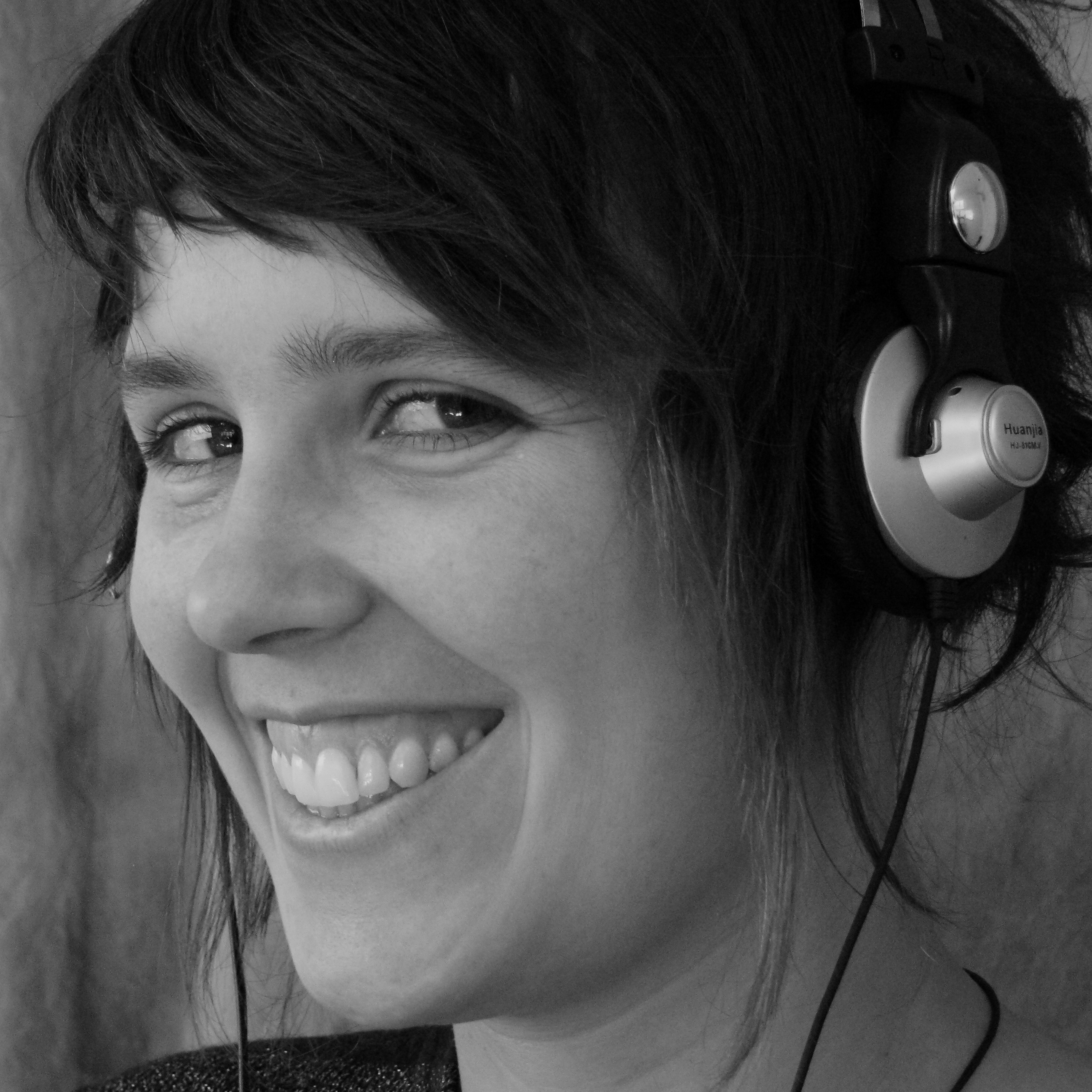
Kyle records ambient sound

Our doc following international adoptee Vivian back to China had its interviews and sounds recorded in speeding trains, noisy village markets, a busy orphanage and a bustling rural house filled with the sounds of family and sizzle of hot cooking pans. Our sound designers are taking all these noises, voices and music and weaving an immersive world of sound for the film.

“What we see when we watch a film is only half the experience,” says sound editor Andreas Mendritzki, who along with Kyle Stanfield, is bringing together all the sound to form the final soundscape of The Invisible Red Thread.

Andreas and Kyle are from GreenGround Productions, a production company in Montreal. Over the next three weeks, they will be seamlessly combining all the sound that was recorded in the field in China and Toronto with music, voices, narration and sound effects from a library.

“Sound design is about creating everything that you hear when you go to see, or go to hear, a film,” says Andreas.

For a sound designer, a documentary like The Invisible Red Thread poses different challenges than a fiction film.  “Documentary in general needs a lot of cleaning,” he says. “The conditions out in the field aren’t always ideal for recording sound, like they could be in a studio.”

This means combing through the recordings to find the  “pops, hisses, and clicks,” small blemishes in the sound created by the recording equipment, or the rustling of clothing or wind on the microphones. It takes time and patience, but clean sound is essential for allowing the audience to feel a part of the world on screen.

“It’s a lot of detailed work, but audiences are very sensitive,” he says. Distracting sound, even if it’s subtle, can pull the audience away from the story.  “Sound is a huge part of film making, and I think it’s sometimes undervalued,” he says.

“It has a lot to do with how we evolved as human beings- we think very visually, but sound engages us differently.  Emotionally, sound has a different impact.  In a film, visuals tell us about the world outside of us, and tell us what to think.  But sound goes more directly to our inner world. It tells us how to feel.”

Leave a comment

Seeking home video footage of parents adopting in China

Do you have some footage you could share with us?

As we move into rough cut #2, we’re realizing that we need more ‘archival’ footage to help tell the bigger background story of this film: one girl’s journey back to China where she was born. Perhaps you or someone you know recorded some video footage of their adoption adventure to China? If so, we’d love to know about it!

We are seeking video on any format (VHS, HI 8, Video 8, etc.) filmed between 1991 and 2000 in any region of China. Ideally, we’d see a couple and/or the larger group on their trip to the orphanage where they adopted their child, perhaps first receiving the baby, holding and feeding their new child/ children, etc. If you have footage of the orphanage in general (exterior or interior) or general footage of the city and its sites, that would be very helpful, too.  And the last thing we are seeking is billboards or posters in China that promote the idea of Family Planning and the One Child Policy.

 This footage would be used to illustrate two sections of the documentary, each about 1 minute long, where we give some background on China’s “Family Planning Policy” (One Child Policy), the  rise in local informal adoptions and the opening of the country to international adoption.

If you have or know of any video footage or photos like these, please let us know! You can drop us an email at maureen@picturethis.ca or call 514-484-1145 and we’ll let you know how to get it to us. In thanks, we’ll list you in our film’s credits, copy your old video footage to DVD so you can watch it more easily and send you a signed final copy of the documentary “The Invisible Red Thread” when it’s done. 

Please spread the word and thanks very much for helping us complete this film!

1 Comment

Editing Room Chaos To Order!

A peek inside the documentary editing process

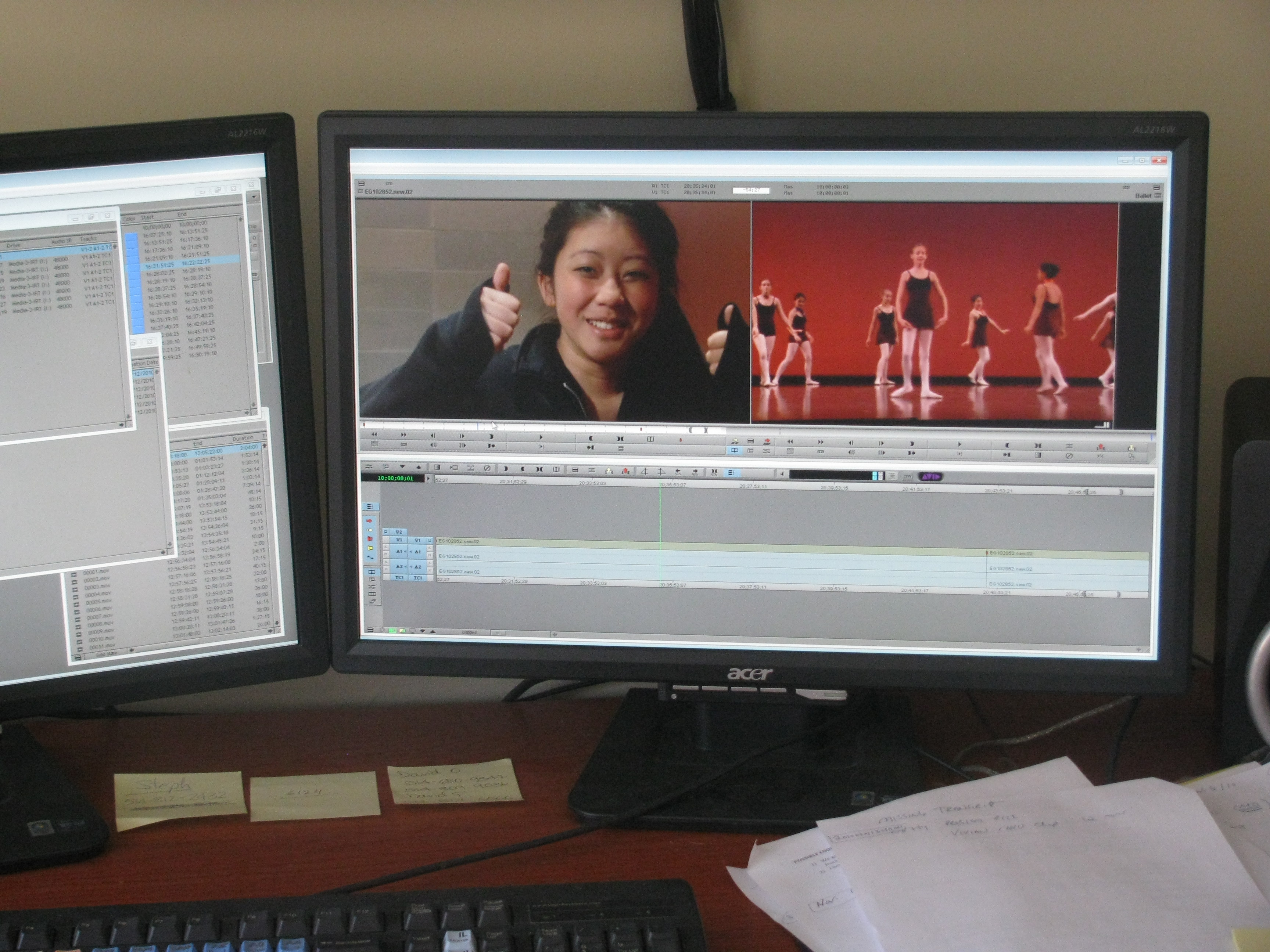
What goes on behind the scenes when you need to take 40 hours of footage and condense it into a coherent one hour documentary? The first step: organizing!

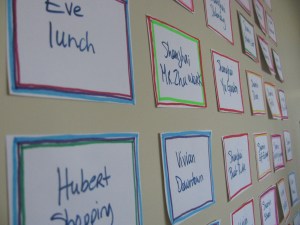
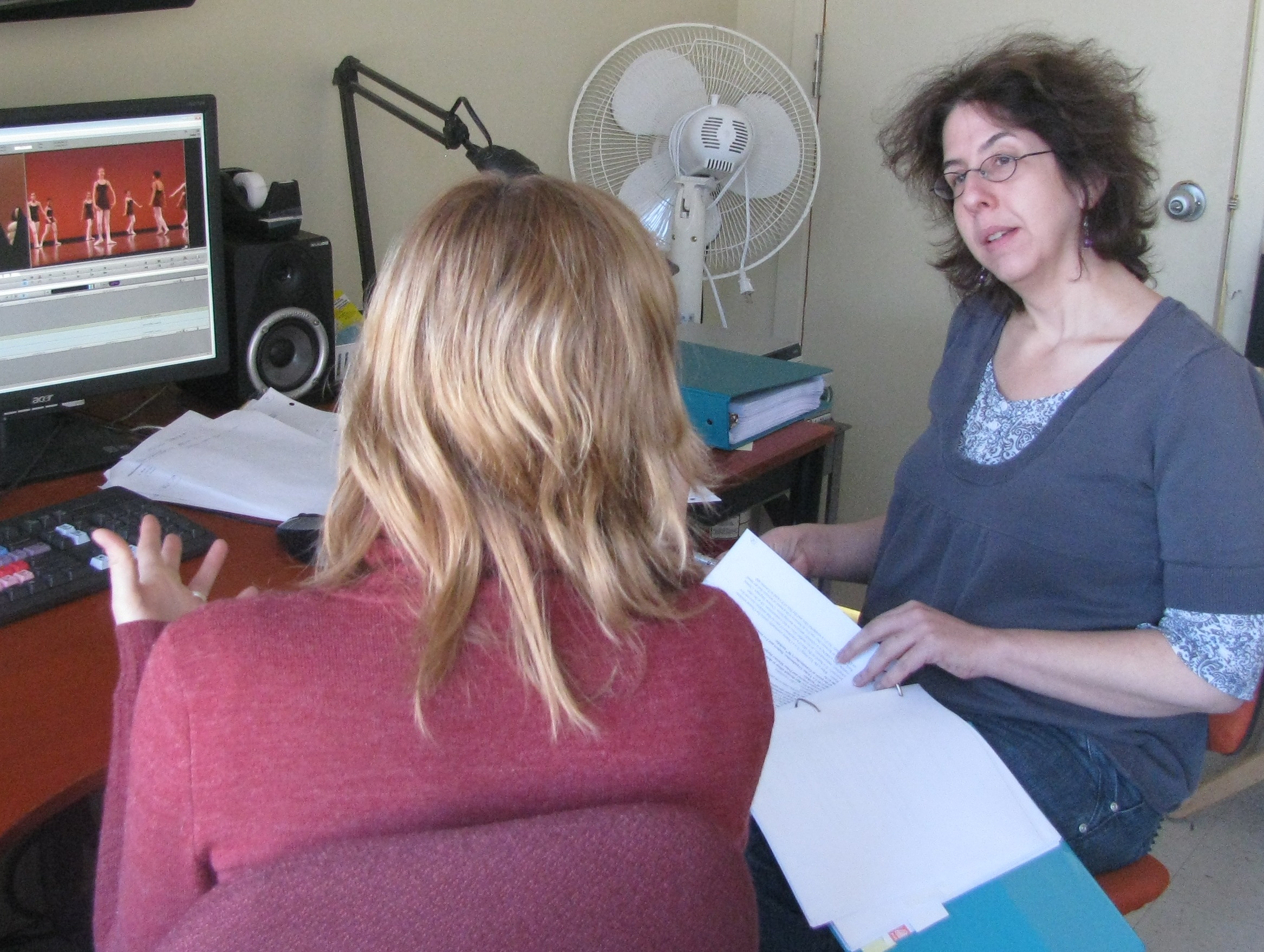
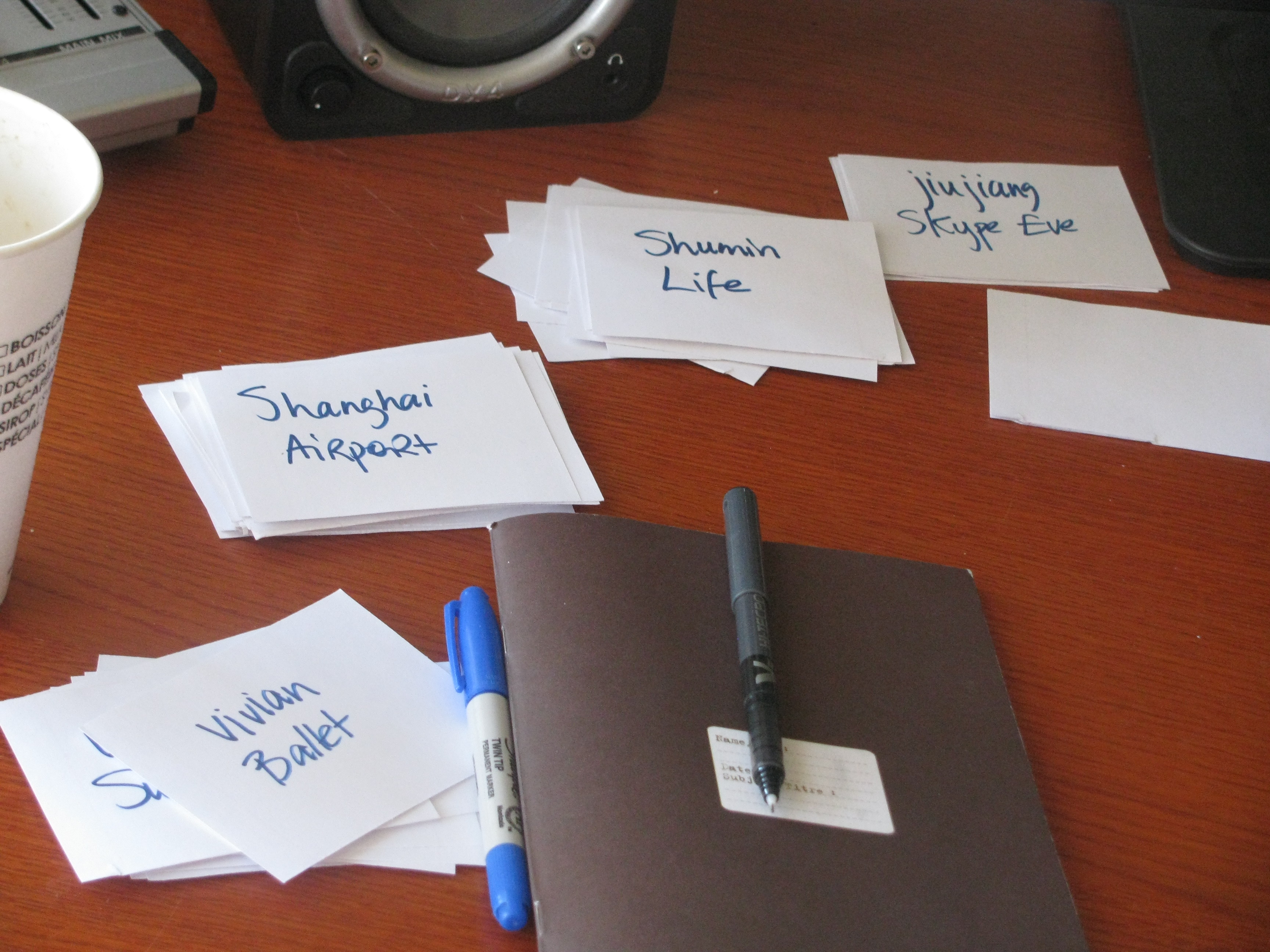
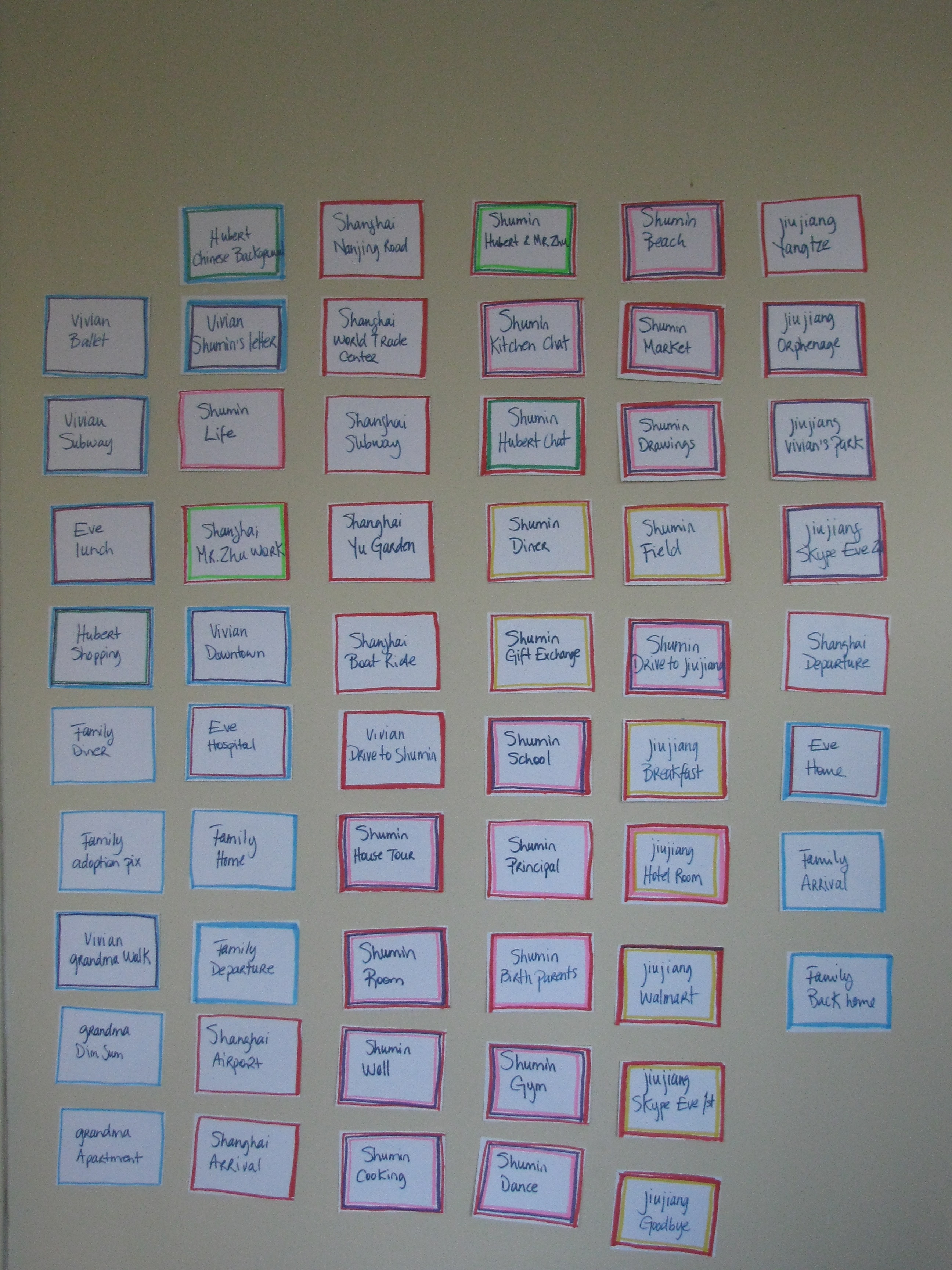
Editor Catherine Legault makes cards of all the potential scenes and colour codes them – one colour for China, another for Canada and different colours depending on which ‘character’ is the main one in that scene.  Our main goal is to keep the film on Vivian’s story of her return to China, the country where she was adopted from, while still highlighting the story of Shumin, a girl who was adopted locally within the same province in China around the same time. Their meeting and how it affects each of them is the story we’re working to create as a film.

The cards go up on the wall in the order Catherine thinks will work to tell the film’s story. These story aids will be moved and restuck many times throughout the edit! During the first scene assembly and the next stage rough cut, some scenes will eventually be dropped if they feel repetitive or out of place, or if the film is just too long.

Co-director Maureen Marovitch and Catherine then discuss the order and watch some of Catherine’s early edit attempts to see if the flow of the film is working as planned. Some parts do, others don’t so it’s back to shuffling scenes, adding narration, and trying new ways to put the elements together.

The edit book seen here is a book of everything that’s been shot, carefully transcripted. Yes, that took many hours and several people! With so much material, it can be easy to lose track of great clips or moments. It also helps the director find just the right interview line easily when not at the edit suite. It also will help us keep an archive of the material for the future, if we ever revisit the story in a future film.

By the end of this weekend, Catherine will have put in many late hours and we’ll have Rough Cut #1. Then there will be Rough Cut #2, the Fine Cut and finally, Picture Lock. The date for Picture Lock is slated for that is end of January. Then it’s all the sound editing and design. But that’s a future blog entry. Now, it’s back into the picture edit suite!

Tagged , , , , , , , , , , | Leave a comment

Marie-Claire China Magazine follows Vivian’s journey

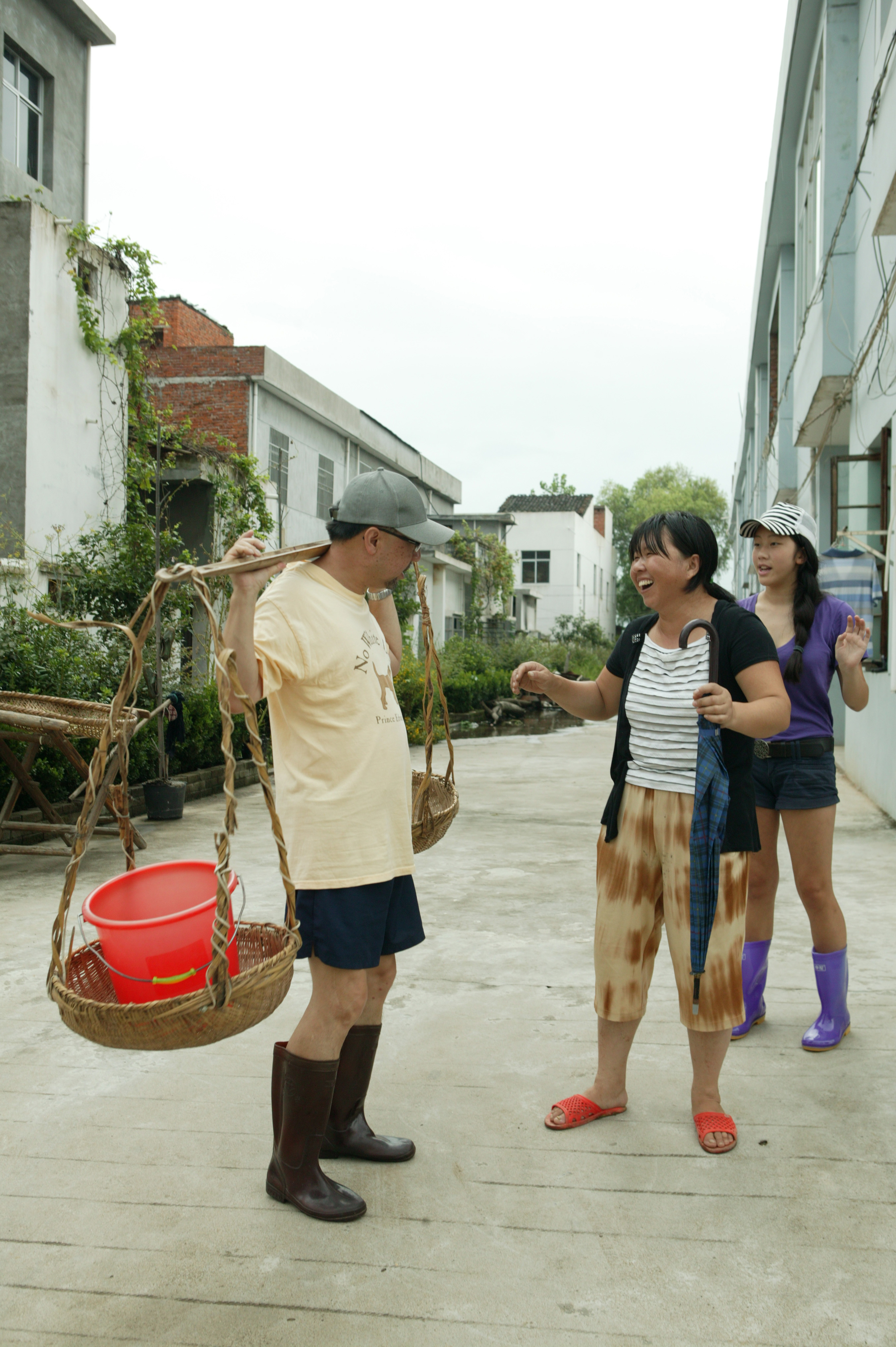
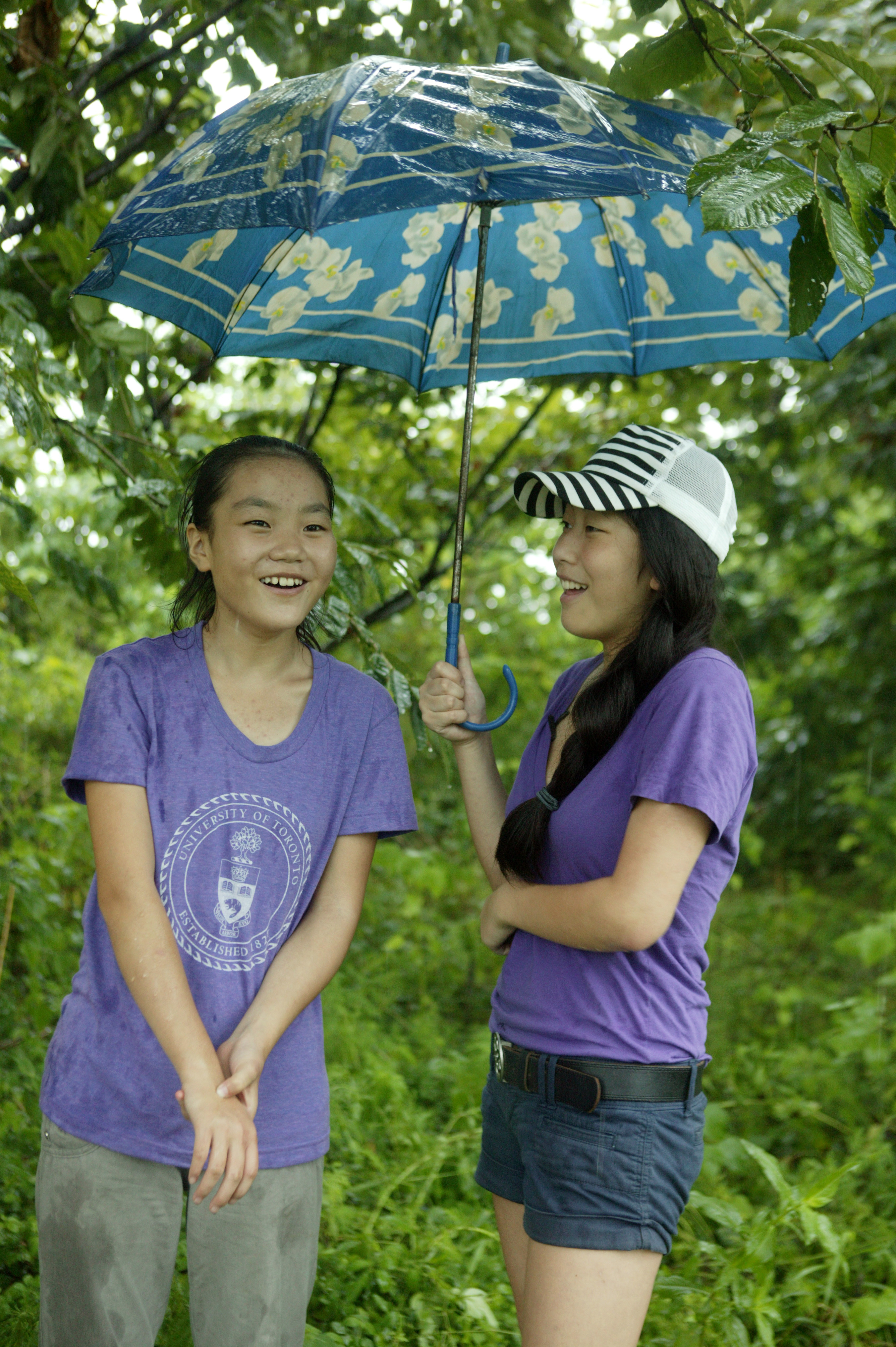
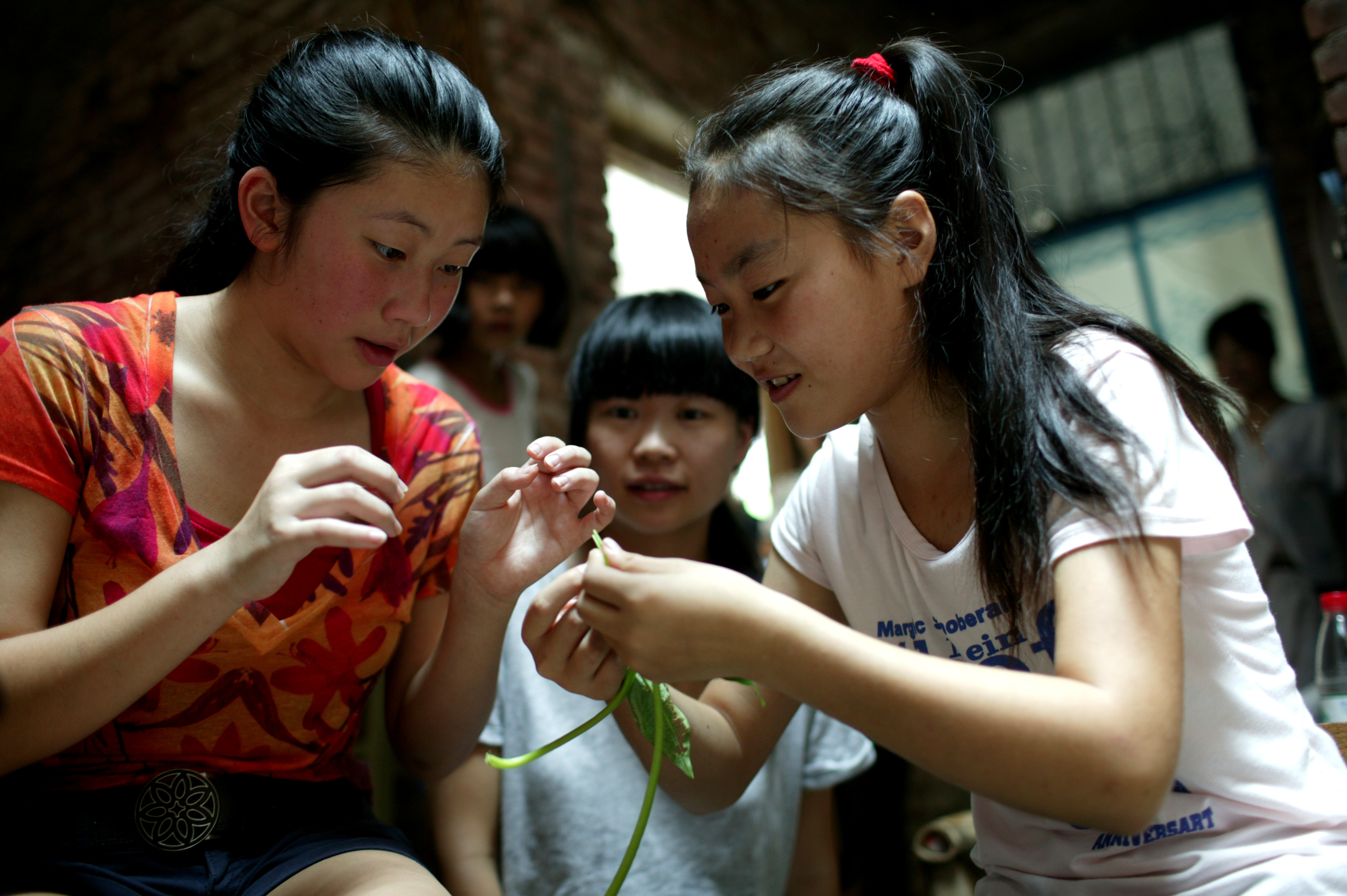
Marie-Claire magazine (China) sent a photographer to follow Vivian and her father Hubert as they went on their quest back to Vivian’s birth land. He captured her meeting with Shumin Zhu, a girl who was abandoned much like Vivian was, but adopted locally rather than internationally. The feature article, complete with interviews with Vivian, Shumin and documentary co-director Changfu Chang, will be out in print in China early next year. Meanwhile, here is a peek at some of the images the photographer captured, courtesy of Marie-Claire magazine.


Tagged , , , , , , , , | Leave a comment

Two Photos, Two Very Different Life Paths

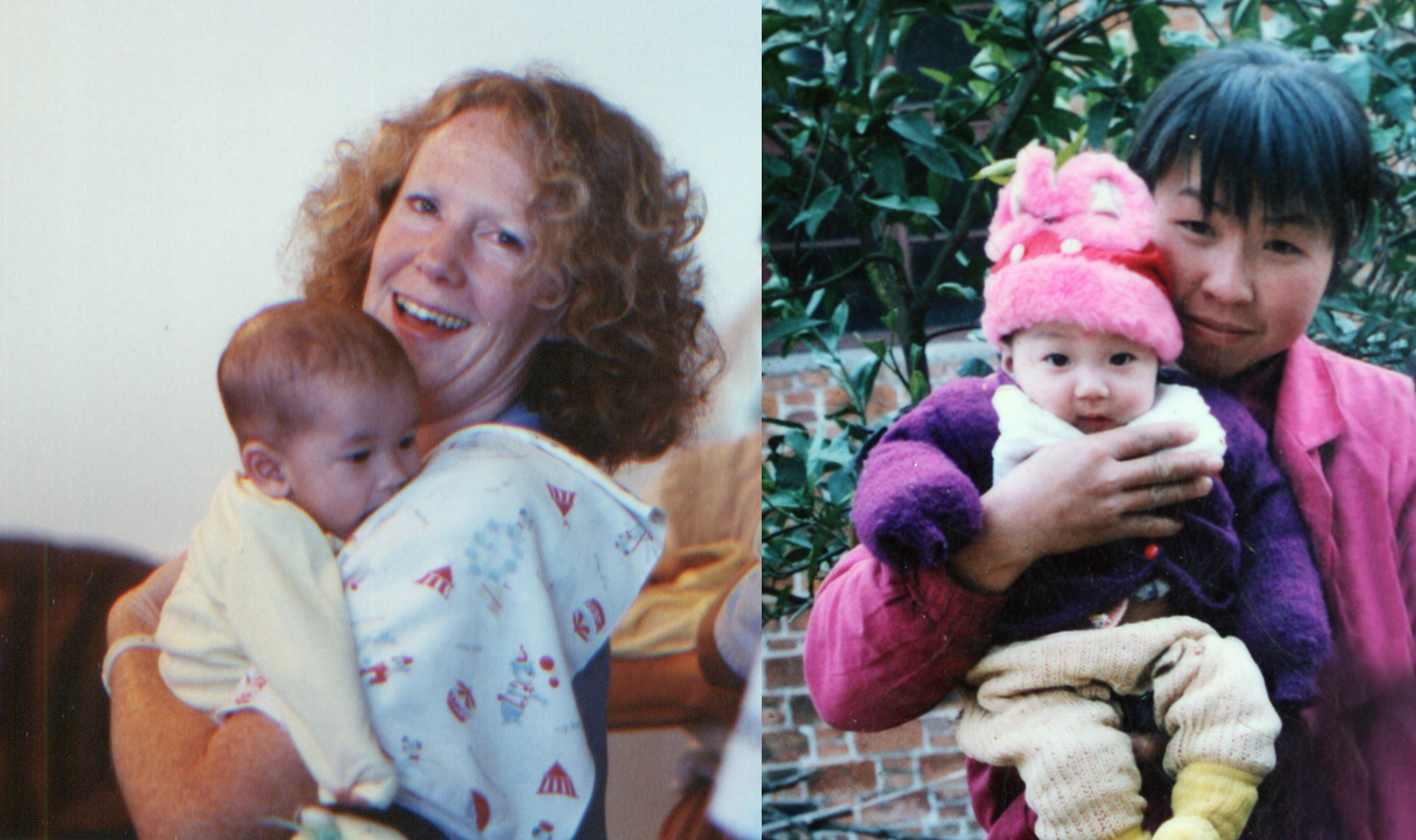
Photos of two baby girls in the arms of their adoring new adoptive mothers. The pictures tell the story of two new families created in Jiangxi province in the mid 1990s when they each received a six month old daughter. Vivian, the baby on the left, departed from China soon after this photo was taken to grow up in Toronto, Canada. Shumin on the right, remained in China and is growing up in Ruichang village in Jiangxi province. Their families, their cultures, everything about them couldn’t be more different now. But fifteen years ago, fate started in the same province, in the same life situation.

Vivian and Shumin are among the tens, possibly hundreds of thousands of girls abandoned across China each year since China’s One Child population control policy was enacted in 1979. Two personal stories and two families created by the policy’s unintended side effects. How will the girls‘ lives weave back together? We’re piecing that together in the edit suite right now. But for the moment, we couldn’t help but be struck by how similar the girls‘ first photos are… and how different their fates will likely be.

Leave a comment

What’s the job of an assistant editor?

This week we take a closer look at our assistant editor Stephanie Weimar as she finishes sorting through over 40 hours of Vivian’s adventure, filmed in Canada and China.

What exactly is an assistant editor?

My job is it to prepare and organize all the 40+ hours of footage in an easy way for the editor. For example, as parts of the material were in Chinese, I was responsible for getting the material translated and aterwards uploaded into the computer together with the original material. Furthermore, I wrie short descriptions for every film clip so the editor later knows what the material is about.

How did you get to Picture This? How did you become an editor?

I started out at Picture This as an intern because I really liked their documentary “When Two Won’t Do“. Then one thing led to another and I started editing and directing projects with them. I started editing long before that. I had learnt the basics at the Nova Scotia College of Art and Design in Halifax, NS. Later I directed, shot and edited two series for APTN( Aboriginal People’s Television Network) with the Inuvialuit Communications Society in Inuvik, NWT.

Do you have a special connection to this film‘s topic?

My circumstance are very different, but as an immigrant to Canada myself, I have a special interest in stories like this.

What is the most exciting/ interesting part of editing a documentary?

It’s great to see how it all comes together. It is also really interesting how often times all preconceived notions of how the story works and how characters relate to each other simply don‘t work out. You just can’t plan or scriptwrit reality!

Is it sometimes the case that you get lost in the story?

Yes, that’s really easy. There are hours and hours of footage to watch and so many ways you can tell a story, it can be hard to keep track and make a decision!

When editing the material, is there the possibility to change the story…and not to edit according to the script?

Of course, sometimes the best ideas only emerge during the editing process and the film can take a completely new direction! Right now the film is starting to take shape into its first rough cut. We’ll see how close or far it comes to what we thought it would be when Vivian and her family first headed off to China to discover her bithplace…

1 Comment

Our editor Catherine

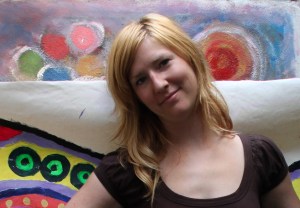
With post-production on our latest doc The Invisible Red Thread now in full swing, we asked our editor Catherine Legault to give us some insider info. Here what she had to say about her process and the job:
What were your first thoughts when you heard about the doc?

Beyond the adoption stories, what I liked about The Invisible Red Thread project is that it explores wider questions, like how one connects with his culture, his country and his family and to what extent do those elements define us as human beings? In that regard, the film is very much rooted in today’s Canadian reality, not only with adoption but immigration and cross-cultural families.

How long have you been working with Picture This?

I have been working with the team since last January. The Invisible Red Thread is our second project together, but this is my first time working with Maureen Marovitch directing.

Why did you become an editor?

Becoming a film editor is the result of combining my passions for the many artistic practices I’ve done throughout the years, from gymnastics to circus arts, theatre to photography, filmmaking and music. Filmmaking borrows elements from all of those past experiences, while editing is the creative process that allows me to express them all at once.

Do you have any special connection to the topic?

Not really but I always had a curiosity about familial, generational and cultural affiliations. And The Invisible Red Thread is all about that.

Do you know friends who have adopted or people who were adopted?

No, but one of my relative had to give her child up for adoption. So I know the other side; how one can feel about abandoning her child. She ended up tracking her back and they are now in contact. I think it made a tremendous change in her life and a true relief in her heart and soul.

What is the most challenging task when editing a documentary film?

Every doc has challenges of its own and that’s the most challenging for me; there is no magic answer. Storytelling has a mind of its own and it works in mysterious ways. For me, editing is how to be creative when working within constrains: the visuals, the sounds, the storyline, the characters, the topics, etc. while keeping the film director’s vision, the overall storyline and the character’s arc in mind.
But maybe the most challenging is to describe what editing is all about! Let’s put it that way: it’s multi-layered and polyphonic!

Is there a script when editing or do you discuss the material and then the editing can start?

I almost never worked with a script because of the very nature of documentaries, but I always discuss the material with the director before starting anything. It’s actually a crucial step in the editing process. That’s where ideas are shared and understanding happens. That said, no script doesn’t mean no plan!

Have you ever been to China?

Not yet, but I’d love to!

Tagged , , , , , , , , | Leave a comment